The Story Structure Rescue
The mid-stage intervention for stuck writers:
A complete read of your outline or partial draft, 3 hours of recorded guidance,
and the clarity to finally finish the right manuscript
You’ve tried to get help (or seriously considered it).
Maybe you’ve joined a critique group. Or hired a writing coach. Or sifted through craft books and taken courses, waiting for the tip that will finally speak to your doubts about your story.
And it’s not that none of it helped.
It’s that it didn’t solve the problem you’re actually facing now:
You don’t need feedback on a chapter. You need someone to look at the whole thing you have so far and tell you what’s going on.
Because you can feel the cost of continuing without that clarity.
You’re writing scenes that now risk becoming part of the wrong version of the story. Or tinkering with language and historical detail while the foundation underneath keeps shifting. You’re working hard… and still not moving forward in a way that feels like it will end in the book you wanted to write.

This is the in-between stage most writing help is bad at.
Most writing support is built for one of two situations.
Early-stage help: feedback on pages, craft tips, accountability, overcoming perfectionism and other psychological blocks.
Late-stage help: a full developmental edit once the manuscript is complete.
But what if you’re in the middle?
You have an outline and/or a partial draft. You can’t get what you need from piecemeal feedback anymore. And you don’t want to force yourself to finish a full draft you already suspect is structurally off.
So you’re left with a choice that feels awful:
Keep gambling on small slices of feedback and hope something clicks.
Or push through months of drafting while half-knowing you may be building on the wrong foundation.
Neither option is designed to help you move forward with confidence.
‘Just push through to the end’ is not neutral advice.
Yes, you’ll learn things by drafting. But ‘push through’ has costs writers rarely talk about.
You can:
get emotionally attached to the version you’ve already written, even when you know it isn’t working.
spend dozens of hours writing scenes that later have to be cut – not because they’re bad, but because they weren’t right for the story.
lose enthusiasm for the writing process as a whole from drafting in a constant state of second-guessing.
And in the worst case, you simply don’t finish because pushing through becomes a slog you dread.
Many unfinished drafts aren’t the result of laziness. They’re the result of a slow loss of conviction.
What you need is simple… and surprisingly hard to find.
You need someone experienced to read everything you have so far (not just a sample), see the story-level issues that piecemeal feedback can’t reveal, and give you a clear way forward.
That’s what the Story Structure Rescue is for.
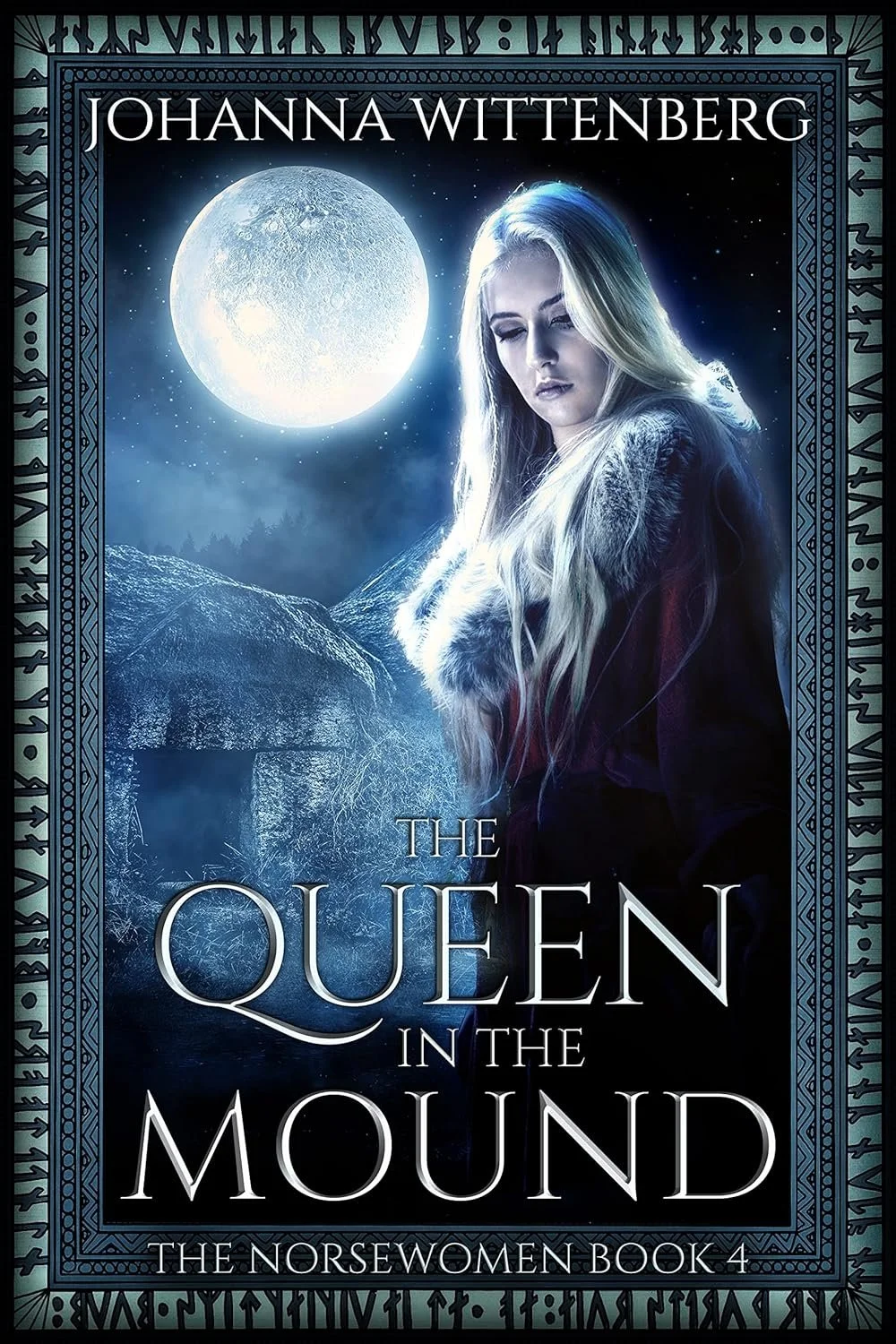
‘Her passion for history and deep knowledge of both historical and fantasy genres shine through.’
It’s been my pleasure to work with Kahina on developmental edits for several books in my Norsewomen series, and I recommend her highly. Her passion for history and deep knowledge of both historical and fantasy genres shine through in every edit she has provided.
Kahina has an amazing ability to pinpoint both the strengths and opportunities in my manuscripts, always offering insightful feedback and suggestions that assist me in delivering a polished, captivating story. If you’re looking for an editor who understands historical fiction and fantasy inside and out, Kahina is an excellent choice.
— Johanna Wittenberg, historical fantasy author
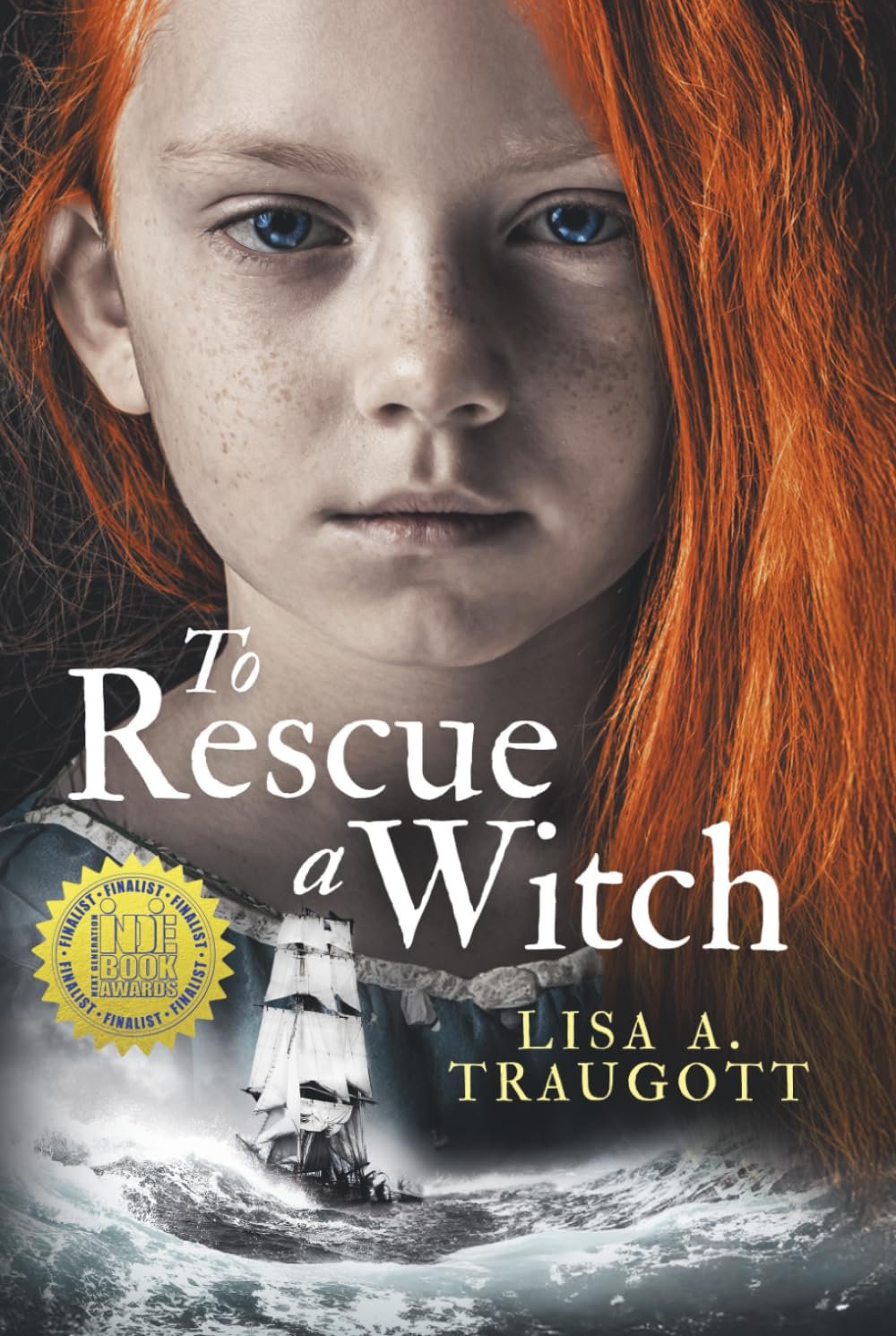
‘The prequel became an Amazon bestseller.’
Working with Kahina as a structural editor has been an amazing experience. For my first novel, To Rescue a Witch, she gave me a very detailed report of what did and didn’t work and (most helpfully) offered specific, actionable advice to improve the story.
This was followed up by a Zoom call where she answered my questions about the report. I found her report so useful, not only did I hire her for a follow-up report, I also hired her to edit the prequel, To Condemn a Witch.
My debut novel was named a finalist for a Next Generation Indie Book Award and the prequel became an Amazon bestseller. I HIGHLY recommend her editorial services and am looking forward to working with her again.
— Lisa A. Traugott, historical fiction author
‘Her perceptive expertise is motivating and invaluable.’
Let’s be honest. If you’ve done your job as a writer, you will send an editor what you feel is your absolutely best work. I have done this numerous times with Kahina, and each time I receive back ten or more single-spaced pages of personalized suggestions (I think of them as assignments) on how to improve my novels.
Plot, characters, theme, and setting, she respectfully covers them all in clear and professional detail. Like with any great teacher, her perceptive expertise is motivating and invaluable. Thank you, Kahina!
— John Blossom, multi-award-winning author of fantasy with folklore elements

What you get in the Story Structure Rescue
This is not a course, a critique swap, or a quick consultation. It’s a focused, high-attention intervention designed to give you story-level clarity before you commit more time, energy, and words to the manuscript.
Here’s how it works.
I.
Two complete, uninterrupted reads of everything you have so far
I read your outline, partial manuscript, or a combination of both – up to 50,000 words – twice.
This allows me to see:
the throughline that’s trying to emerge,
where narrative tension (the thing that keeps readers reading) is breaking down,
which decisions are causing downstream problems,
and which uncertainties are creating your current decision fog.
This depth of attention simply isn’t possible with the usual piecemeal feedback that critique partners, coaches, and course tutors give.
II.
A short intention-setting questionnaire (that does real work)
Before we talk, you’ll complete a brief, personalized questionnaire about:
what you want this story to be,
what feels uncertain or unstable right now,
how you like to approach planning and drafting (the old “plotter” versus “pantser” spectrum, but more sophisticated),
and anything I didn’t quite understand in the submitted material (to get us both on the same page).
For many writers, this step alone starts unlocking insights – because it forces them to articulate things they’ve been holding only half-formed in their heads.
Writers usually have this back to me within one week.
III.
Three hours of one-to-one, recorded story-level guidance
We then meet for a three-hour private consultation, where I walk you through:
what I see in the manuscript as it currently stands,
which structural issues matter most,
what decisions need to be made now versus later,
and how to move forward deliberately instead of reactively.
In turn, you can ask questions, test ideas, and think aloud in real time, all with someone who understands story craft, your genre, and the unique gap between your current material and your ultimate vision.
(If scheduling a single three-hour block isn’t feasible or desirable, the session can be split into two 90-minute calls, held within the same week.)
You’ll receive a recording of the session(s) so you can be fully present in the conversation and don’t have to rely on memory or frantic note-taking.
IV.
Optional continued support
If you want to continue the conversation after you’ve had time to process, you can add additional one-hour consultations at £110/hour.
No pressure. Just support where it’s genuinely useful.
This is what the work actually gives you
Instead of continuing on momentum, habit, or hope, take this pause designed to answer high-leverage questions that shape everything downstream.
Questions like:
Does the story have a clear, tense throughline problem that holds the book together, keeps readers glued to the page, and sets up a satisfying ending?
Which version of the premise has the most weight and potential to attract readers?
How do I ensure readers will want to spend a whole book with my main character(s)?
What am I doing to prevent the infamous “sagging middle”?
When those questions are unresolved, every scene you write is a gamble. When they’re answered, writing stops feeling like guesswork.
Writers who do a Story Structure Rescue usually leave with:
A clear plot throughline, including the story problem, turning point (writers often miss this), and resolution – and what to put in the middle.
Arc problems, learning experiences, and resolutions sketched out or deepened for the story’s most important characters.
An iteration of the story that centres what they truly care about.
Greater understanding of how to apply craft concepts that never clicked before.
Relief from holding too many competing possibilities in their head.
Confidence that the next words they write belong in the right version of the book.
A renewed sense of conviction about the project itself.
TONS of new ideas—and connections between ideas that once seemed hopelessly scattered.
This is about more than motivation, accountability, or surface-level fixes. It’s a reorientation to reconnect you with your creativity and the spark that inspired this story in the first place.
Is the Developmental Assessment Right for You?
Is the Story Structure Rescue right for you?
This service is for writers who:
Have up to 50,000 words of an outline, a partial draft, or a messy hybrid – and know they can’t keep moving forward intelligently without stepping back first.
Sense that what they need now is feedback and direction on everything they have so far, not just individual chapters or samples.
Want a brainstorming partner or writing craft teacher.
Are willing to question assumptions about their story’s structure, premise, or approach – even if that means letting go of work they’ve already done.
In short, you’re partway through and stuck or uncertain about your story for one reason or another.
This is not for writers who:
Have a complete manuscript (if this is you, my Developmental Assessment is what you want).
Have story ideas percolating mentally and maybe a few scattered scenes written, but no outline or partial draft yet.
Are not open to revisiting big-picture decisions about structure, premise, or direction.

The Investment
The Story Structure Rescue is GBP £660.
This includes:
Two full read-throughs of your outline and/or partial manuscript (up to 50,000 words).
A personalized intention-setting questionnaire.
Three hours of one-to-one recorded consultation.
Clear story-level diagnosis and a concrete path forward.
There are no hidden fees, no subscriptions, no upsells, and, unlike in most writing coaching, no long-term commitment.
Payment and follow-up
Payment is a one-time fee of £660, due at booking.
If, after the session, you want to continue the conversation, additional one-hour consultations can be booked on an as-needed basis at £110/hour.
A perspective worth considering
The alternatives to the Story Structure Rescue include:
(more) craft books (£10s to £100s).
courses (£100s to £1,000s).
coaching in a group (£100s) or one on one (£1,000s).
fragmentary feedback from various sources that never quite adds up to clarity.
Individually, these things aren’t wrong. But together, they often cost more – in both money and momentum – than stopping to get clear once.
The Story Structure Rescue is designed to be that pause.
Common questions
The Story Structure Rescue is a little different from typical writing services out there, and you may understandably have questions. Let’s clear up some of the most common ones. If you don’t see your question here, get in touch using the enquiry form at the bottom of the page.
-
In many cases, no. In my work as a developmental editor, I’ve worked with many authors who would have benefited from this service. The drafts they submitted for editing were often far longer than they needed to be because the story was scattered. Since editing is typically priced by word count, this meant the edit was more expensive.
And that was just the initial edit. Those authors also needed more follow-up support than usual because the story required that much work.
The Story Structure Rescue can actually save you money.
-
You can submit an outline alone, a partial manuscript alone, or a combination of outline and partial manuscript totaling up to 50,000 words.
Your outline can be in bullet points, paragraphs, or any format you like, as long as it’s understandable to someone who knows nothing about your story yet. Gaps in the plot or unresolved questions about any element of the story are also fine; just indicate them in the document.
If the material truly isn’t clear enough for me to work with, I’ll let you know. You’ll have the opportunity to revise it so we can start again.
-
It doesn’t need to be polished.
This service is designed for work-in-progress material that’s structurally uncertain – not for clean, final drafts. Messy is fine. Provisional is fine. What matters is that the material reflects your current thinking about the story and that an outsider (like me) can understand it at least decently well. What I don’t understand, we can clarify in the questionnaire and the call(s).
-
I’ll identify the story-level issues that matter most, explain your options clearly, and help you brainstorm and decide on solutions.
That doesn’t always mean prescribing a single “correct” fix. There’s rarely one answer to storytelling problems. In many cases, the most valuable outcome is understanding which decisions you need to make, why they matter, and what the tradeoffs are.
The goal is not to replace your creative judgment, but to give you the clarity to use it confidently.
-
No, and it’s not meant to be.
The Story Structure Rescue is a pre-drafting or mid-draft intervention. If you already have a complete manuscript and are ready for in-depth revision feedback, the Developmental Assessment is the better fit.
-
One nice thing about the Story Structure Rescue is that, unlike a typical critique or edit, it’s a two-way conversation. If you don’t like a potential solution I propose, you can reject it so the conversation can move on. If you don’t understand something, you can ask for clarification. And if you suddenly get a brilliant idea as we’re talking (it’s happened many times before with my clients), I’ll adjust all my feedback thereafter to accommodate that flash of genius.
-
That’s okay! If you’re unsure whether you’re at the right stage for the Story Structure Rescue, you’re welcome to reach out before booking. I’d much rather help you choose the right kind of support than sell you something that doesn’t fit.
‘working with Kahina improved both my debut novel and my overall craft as an author.’
As a debut author, it was important to me to find an editor that was broadly talented to help improve my writing, but who also had niche experience in my sub-genres to ensure my book was the best product it could be.
While I was waitlisted to work with Kahina, the experience was absolutely worth pushing my publishing timeline! Her thorough review of my manuscript brought out its strengths, my writing opportunities, as well as notes on selling points to consider in revisions.
While many independent authors choose to self-edit, working with Kahina improved both my debut novel and my overall craft as an author.
— C. L. Rhodes, author of Harem Lies, an ancient historical romance set in Sasanian Persia
‘I have never come across an editor who so intuitively understands the story I want to tell.’
I could never have got where I am without Kahina’s insightful and encouraging critiques.
They have been invaluable in helping me to recognise my strengths as a writer, work on the areas that need improvement, and produce stories that I am proud of.
I have never come across an editor who so intuitively understands the story I want to tell and invests so much to ensure the outcome is the absolute best it can be.

‘Kahina has served as my literary Gandalf.’
Over the course of nearly two years, Kahina has served as my literary Gandalf as I traversed the treacherous landscape of rewrites and revisions (and she made it fun!).
Her care and guidance have been invaluable to me as a first-time novelist, and I couldn’t be happier with how my manuscript has turned out.
I have grown so much as a writer, and I am truly grateful to have had my story in the hands of such a talented, capable editor!
— Jordan Toles, returning client with strong agent interest in his debut speculative fiction novel
A clear next step
Before you knew this service existed, you had many options that sounded like they might help: courses, groups, coaching, starting over, pushing through.
Now, the choice is simpler.
You can keep drafting and revising in uncertainty, hoping clarity arrives later. Or you can pause once, look at the whole of what you’ve built so far, and choose your direction deliberately.
Neither path is effortless. But only one prevents uncertainty from compounding.
If you’re at that crossroads, know that this is the moment the Story Structure Rescue was designed for.
Make this draft the right one.

P.S. I created this service because it fills a real gap I’ve seen again and again in the fiction writing world.
After years of editing full drafts, running and participating in group critiques, helping writers find beta readers, and coaching authors of all ages and skill levels through their struggles, a pattern became impossible to ignore: writers struggle most mid-draft, right when the story is taking shape, and the questions get too specific for the usual writing advice.
And yet, there’s almost no support designed for that stage.
I know this not just as an editor, but as a writer who’s spent thousands on craft books, courses, and coaching and never quite getting what I needed from them. I wanted an editor, a brainstorming partner, and a clear-thinking guide all in one, who also had deep knowledge of my story so far. Is that so much for a writer to ask?
I don’t think so. And I want to be that for you.
Apply
If you’re interested in working with me, complete the form with a few details about your project. I’ll review your enquiry and get back to you within 48 hours.